Emotional expression
Give feelings and experiences a form through play, stories, art, movement or sand.
 KKBook now
Child-led therapeutic play for children aged 4 to 13, offering a safe and accepting way to explore emotions, experiences and relationships.
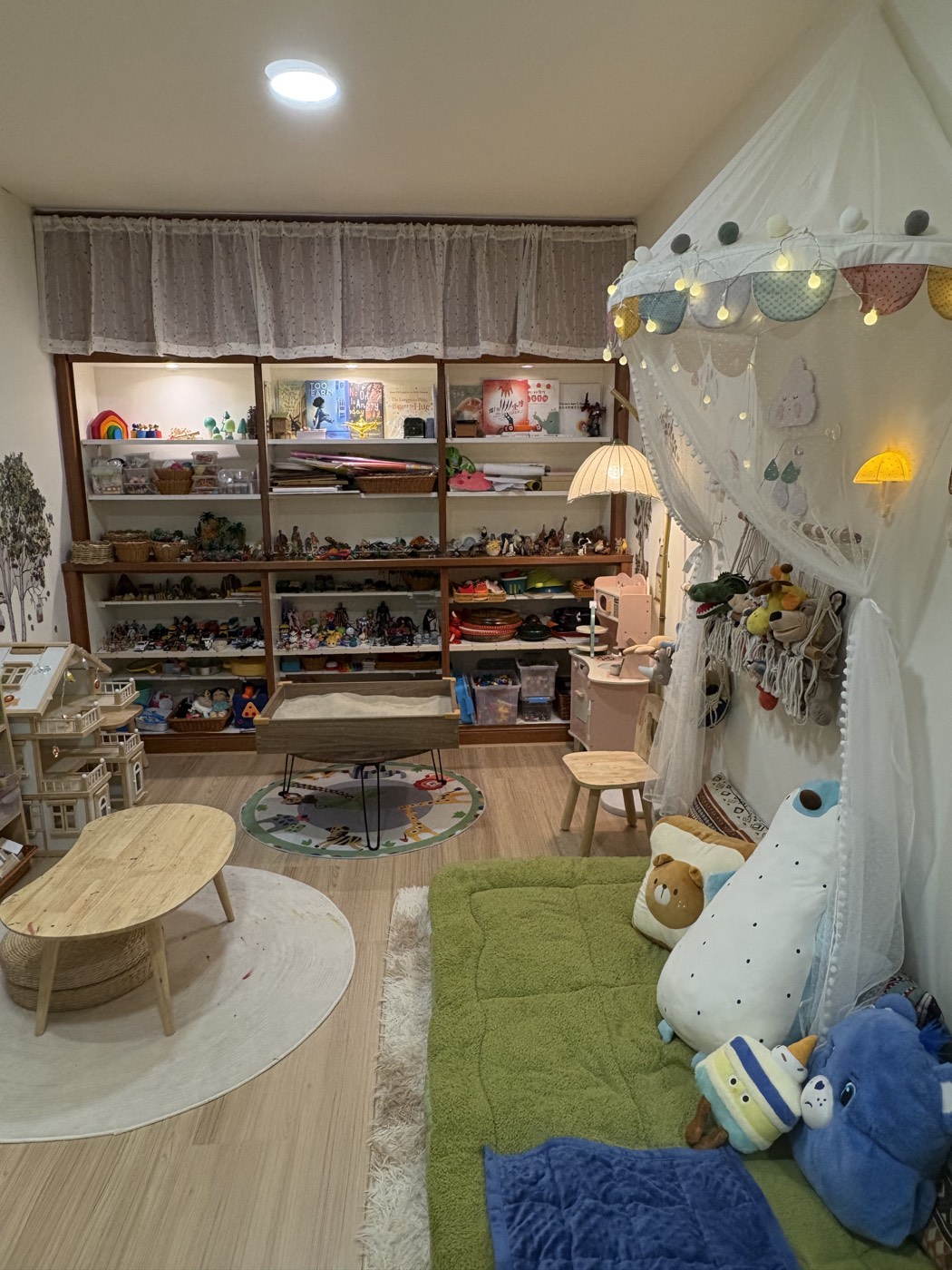
Children naturally use play to explore their world. In a therapeutic relationship, their choices, stories and creative expression can provide a developmentally appropriate route into difficult experiences.
Play materials are selected to offer different ways of communicating, imagining, practising and making meaning.
Give feelings and experiences a form through play, stories, art, movement or sand.
Develop greater awareness and tolerance of strong emotions within safe boundaries.
Explore loss, transitions or stressful events in a developmentally appropriate way.
Experience choice, competence and acceptance without pressure to perform.
Explore trust, connection, boundaries and ways of relating to other people.
Try out new possibilities and responses through imagination and symbolic play.
The therapist follows the child’s pace while maintaining a safe therapeutic structure.
A consistent room, relationship and set of boundaries help the child know what to expect.
The child chooses how to use play and creative materials rather than being required to talk directly.
The play therapist observes themes and responds in ways that support awareness, expression and growth.
Parent discussions support the wider plan while preserving the child’s therapeutic space.

Bee is an accredited therapeutic play practitioner who supports children aged 4 to 13. She uses child-led play to help children communicate experiences and emotions that may be difficult to express in words.
Her work may include sand, art, clay, music, movement, storytelling and visualisation.
Read Bee’s full profile →Play therapy uses therapeutic play as the main medium. The Child Guidance Programme is psychologist-led and may place greater emphasis on psychological formulation and parent guidance. We can help you decide.
No. It takes place within a therapeutic relationship and structured boundaries. The therapist is trained to observe, understand and respond to the child’s play in relation to agreed therapeutic goals.
No. Children can communicate through play and creative expression. The therapist does not force direct disclosure and works at a pace that supports safety and trust.
The arrangement depends on the child and the therapy plan. Caregivers may have separate discussions or reviews while the child has an individual therapeutic space.
Duration varies according to the child’s needs, history, goals and response. The therapist will discuss the recommended direction and review progress with caregivers.
Contact our team for current play therapy fees, Bee’s availability and appointment arrangements.
Share their age, your main concern and any important recent changes. We’ll help you understand whether play therapy may be suitable.